5 min read
Why Workforce Training Compliance Is Now a Board-Level Issue in Australia


Compliance used to be something Australian organisations handled quietly — a folder of signed induction forms, a spreadsheet of expiry dates, and someone whose job it was to chase paper. That era is over.
Across mining, construction, healthcare, and resources, workforce training compliance has moved from the training room to the boardroom. The reason is simple: the legal, financial, and reputational consequences of getting it wrong have never been higher — and regulators are no longer treating non-compliance as an administrative oversight.
At LAAMP, we work with organisations operating some of Australia's most demanding and distributed workforces. What we're seeing on the ground reflects a fundamental shift in how compliance is being understood at the leadership level.
The Regulatory Landscape Has Tightened Significantly
Australia's Work Health and Safety (WHS) Act places the primary duty of care squarely on organisations and their officers. Under the harmonised WHS laws operating across most Australian jurisdictions, a 'person conducting a business or undertaking' (PCBU) must ensure, so far as is reasonably practicable, the health and safety of workers.
That phrase — 'so far as is reasonably practicable' — is doing a lot of work. Courts and tribunals are increasingly interpreting it to include demonstrable, verifiable training. Signed forms don't cut it. A printed certificate that can't be verified doesn't cut it either.
In high-risk industries, the question is no longer 'did the worker attend induction?' It's 'can you prove they understood it, completed it fully, and have the competency to perform the task safely today?'
The Cost of Non-Compliance Is Quantifiable — and Substantial
Beyond regulatory penalties, the downstream costs of training compliance failures are significant:
Workplace incidents and fatalities attract both criminal liability under WHS laws and civil litigation
Project delays caused by unverified or lapsed credentials cost the resources sector millions per year
Insurance premiums for organisations with poor compliance records are climbing
Reputational damage — particularly in publicly tendered projects — is increasingly hard to recover from
The financial case for investing in robust compliance infrastructure is no longer a hard sell. The question has shifted from 'why invest?' to 'what does a genuinely robust system look like?'
What Genuine Compliance Looks Like in 2026
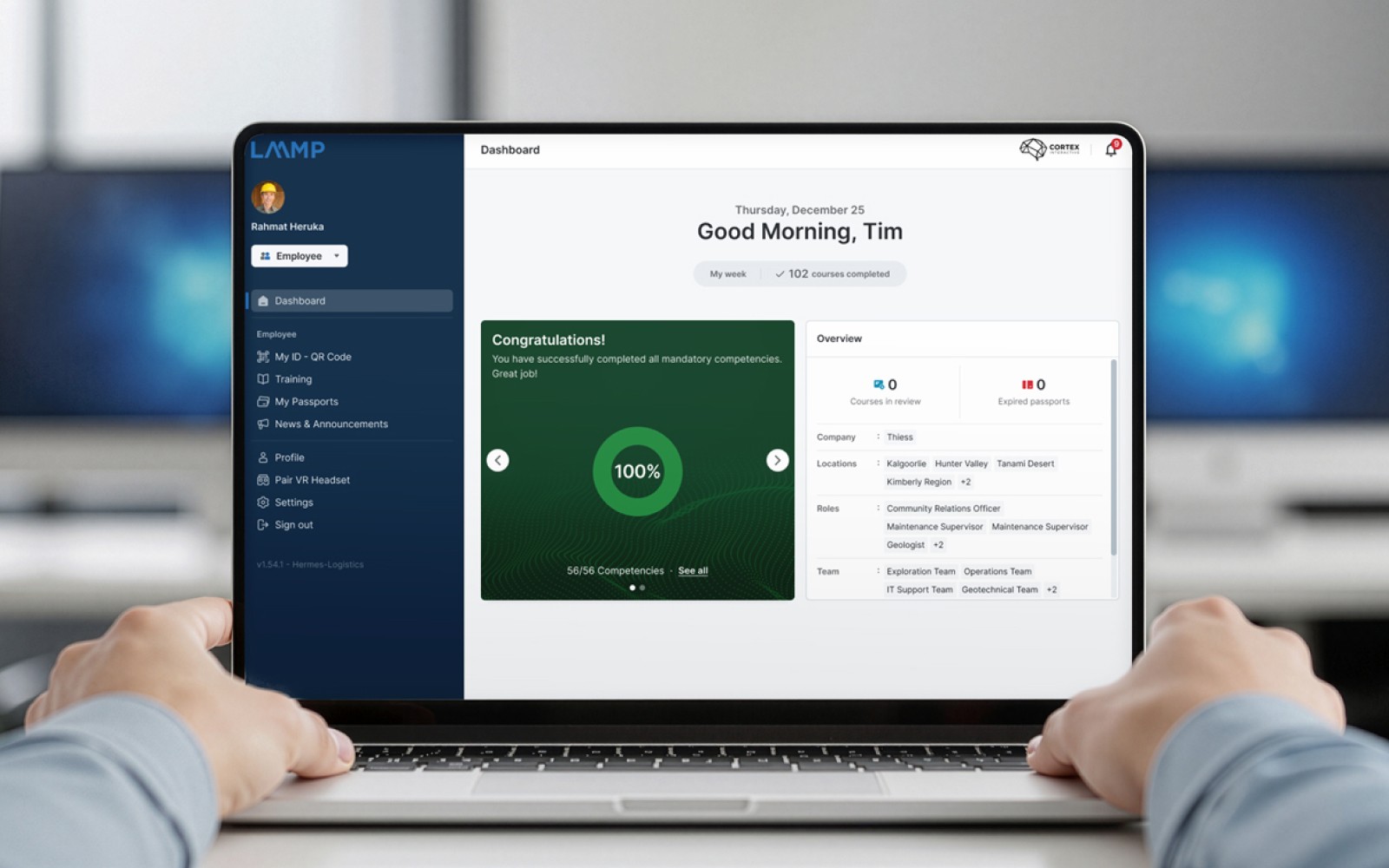
Genuine compliance isn't a tick-and-flick exercise. It means being able to demonstrate, at any moment, that every worker on a given site or project:
Has completed the required inductions and training modules for their role
Has been assessed — not just trained — on their competency
Holds current, verified credentials relevant to their tasks
Can be mobilised or stood down based on real-time credential status
This level of oversight simply isn't achievable with paper-based or generic LMS systems. The industries with the most to lose — mining, construction, and industrial services — are increasingly moving to purpose-built workforce platforms that provide verifiable, digital evidence of training completion and competence.
The Role of Technology in Closing the Compliance Gap
The good news is that the technology now exists to make comprehensive compliance both achievable and manageable. Platforms like LAAMP are purpose-built for organisations with distributed, high-risk workforces — not repurposed corporate eLearning tools dressed up with safety branding.
Key capabilities that distinguish genuine compliance platforms from generic alternatives include:
Digital evidence capture — photo, video, and geolocation evidence tied to specific training events
Facial verification to ensure the person assessed is the person credentialled
Real-time credential tracking with automated expiry alerts
Transferable digital passports that carry verified skills across projects and employers
Full audit trails that are defensible in a legal or regulatory context
The organisations that are getting this right aren't waiting for an incident to act. They're building compliance infrastructure that holds up to scrutiny — from an auditor, a regulator, or a court — on any given day.
Where Australia's High-Risk Industries Are Heading
The trajectory is clear. Regulatory expectations are rising. Labour mobility is increasing, meaning more workers moving between sites, contractors, and projects. And the workforce itself is increasingly distributed — including offshore talent, remote sites, and multi-disciplinary teams that span organisations.
For compliance to keep pace with these realities, it needs to be digital, portable, and verifiable. The organisations that invest in that infrastructure now will have a competitive and regulatory advantage as the landscape tightens further.
Explore how LAAMP's compliance features are helping Australian organisations in mining, construction, and healthcare meet their obligations — and go well beyond them. Or book a demo to see the platform in action.

